
This is not just a stone circle. It’s the largest in the world, built by people who lived over 4,500 years ago and shrouded in mystery. But who were they? Why did they build this? And how does this place fit into one of the most remarkable prehistoric landscapes in Britain? In this post, we’ll uncover the secrets of its prehistoric past, from its construction to its place in the Neolithic world.

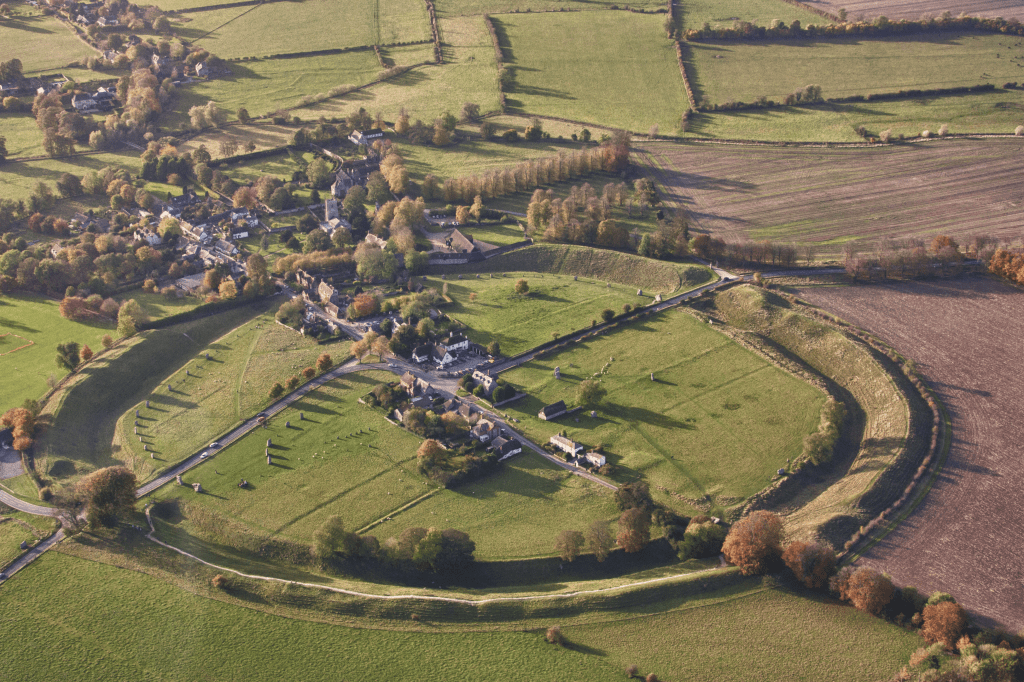
Welcome to the world of Avebury, an extraordinary Neolithic henge monument with the world’s largest stone circle, that surrounds the village of Avebury in Wiltshire. Built over hundreds of years starting in around 3000 BC, Avebury and its surrounding landscape was one of the primary ceremonial centres of Neolithic Britain. While the exact construction phases are somewhat speculative, in this post, I will guide you through what we know about its origins and use, and the monuments in the wider landscape. Also remember, archaeology is ever-evolving, discoveries can change our understanding at any time.
My name is Louise, an archaeology student, and I’m developing a game set in Avebury. Follow along as I share my journey into this extraordinary place and the stories it holds.
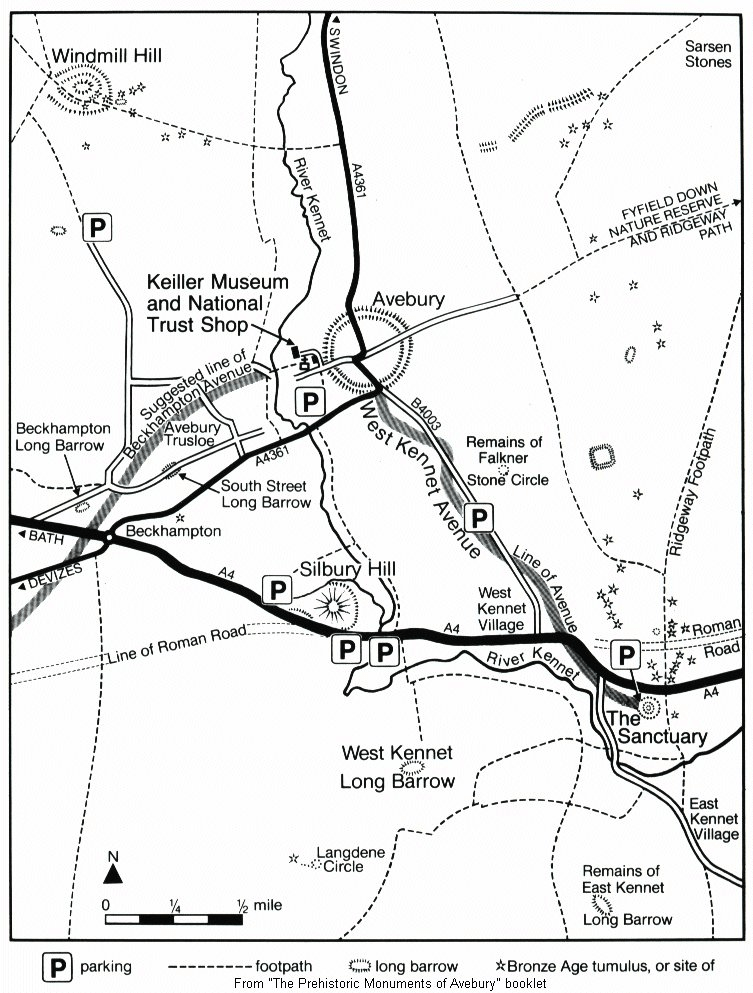
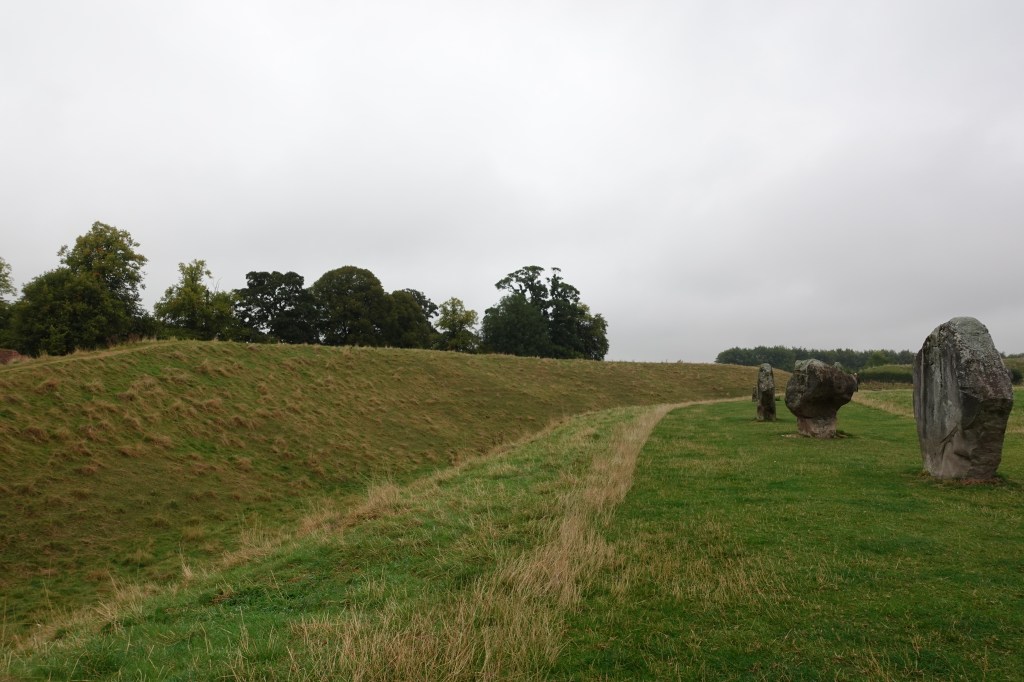
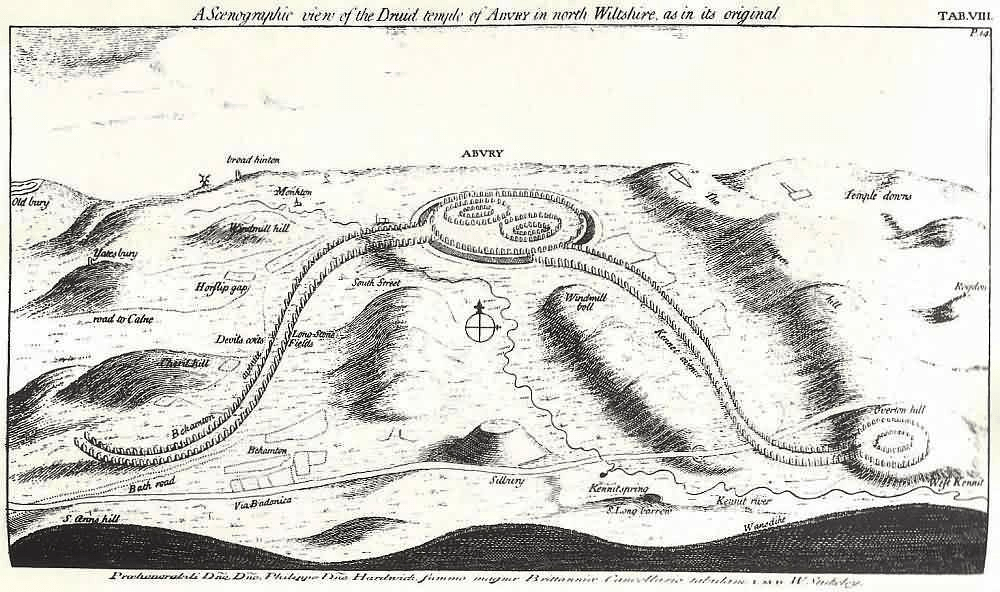
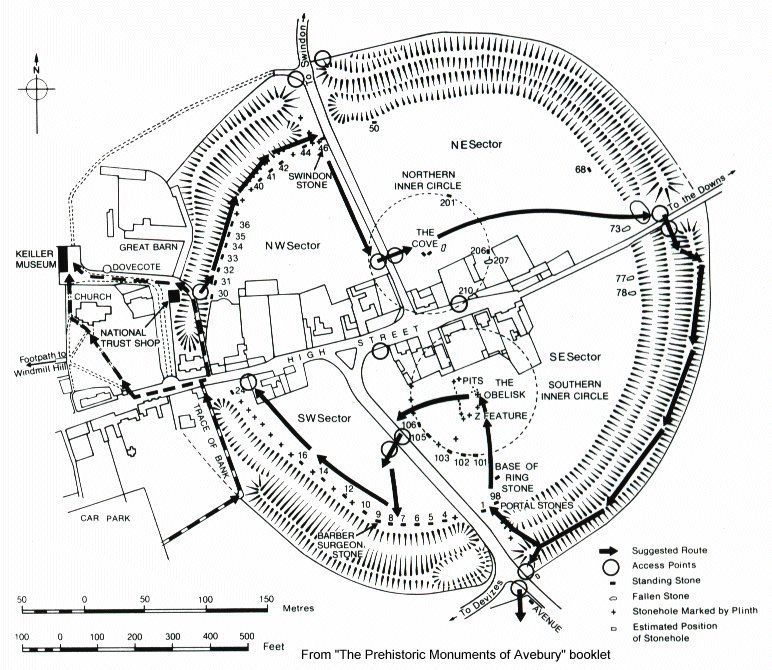
Avebury is located in Wiltshire, in southwest England. The site includes a massive henge, which is a bank and ditch, with a large outer stone circle with two smaller stone circles within, the Northern and Southern inner circles. The village of Avebury was later built inside the monument, dating back to the Anglo-Saxon period. Avebury is also part of a broader prehistoric landscape, which features other remarkable sites like Windmill Hill, West Kennet Long Barrow, Silbury Hill, and the Sanctuary.
Over 6,000 years ago…

(Archaeology Magazine)
There is limited evidence for humans in this area in the lower and middle palaeolithic, and no traces of upper palaeolithic activity. It wasn’t until the Mesolithic with its improving climate and woodland environments, that we get evidence of human hunter-gatherer groups beginning to explore this landscape. Evidence for this is limited to isolated finds of flint tools which mostly date to the later period. None of the find spots in the immediate Avebury area represent anything more than a quick passing, likely being dropped accidentally.
6,000 years ago…
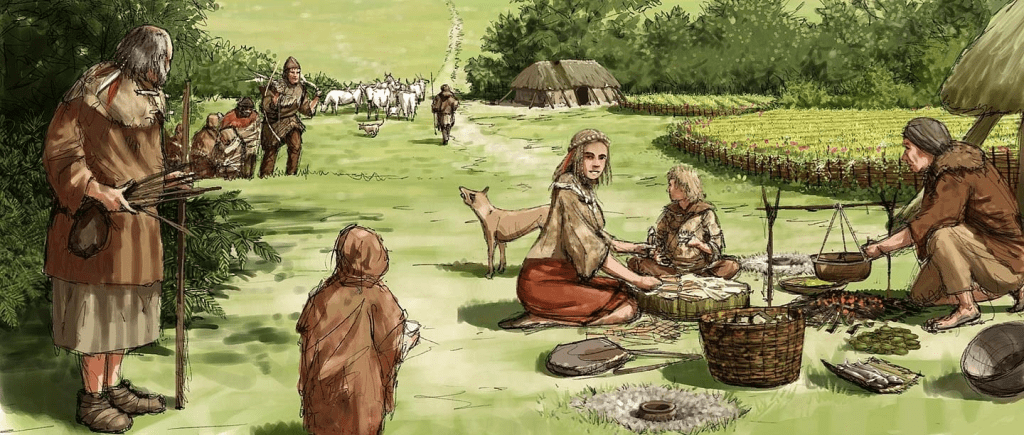
Around 4000 BC, significant changes began to shape life in Britain. This period marks the beginning of the Neolithic, or New Stone Age, a time of monumental transitions. The most notable was the shift from a hunter-gatherer lifestyle to settled farming communities due to the introduction of domesticated plants and animals and the technological development of pottery making. Avebury was likely still heavily wooded at this time, but as farming increased, some of this woodland would have gradually cleared. This transformation was not instantaneous, but by around 3,700 BC, a settled community had emerged in the Avebury area.
Windmill Hill
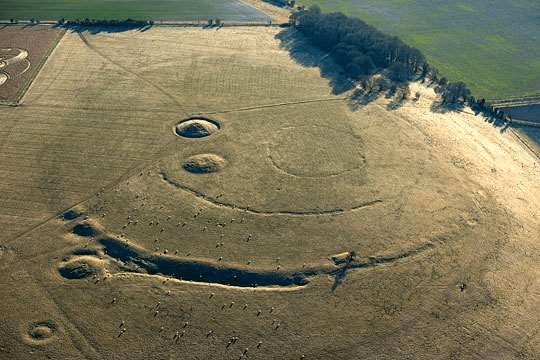
Around 3,675 BC, Neolithic people began constructing a large monument, now known as Windmill Hill. This causeway enclosure, still the largest of its kind in Britain, consists of three concentric ditches. This likely required around 62,000 hours of labour to dig. However, this wasn’t done all at once, it’s thought that groups worked on this over several years, maybe during the quieter period of the agricultural cycle. Archaeological finds reveal large numbers of cattle and sheep remains. This suggests that Windmill Hill may have been a place to hold festivals where animals were slaughtered and artefacts traded or site where ritual feasts were held or a combination.
West Kennet Long Barrow
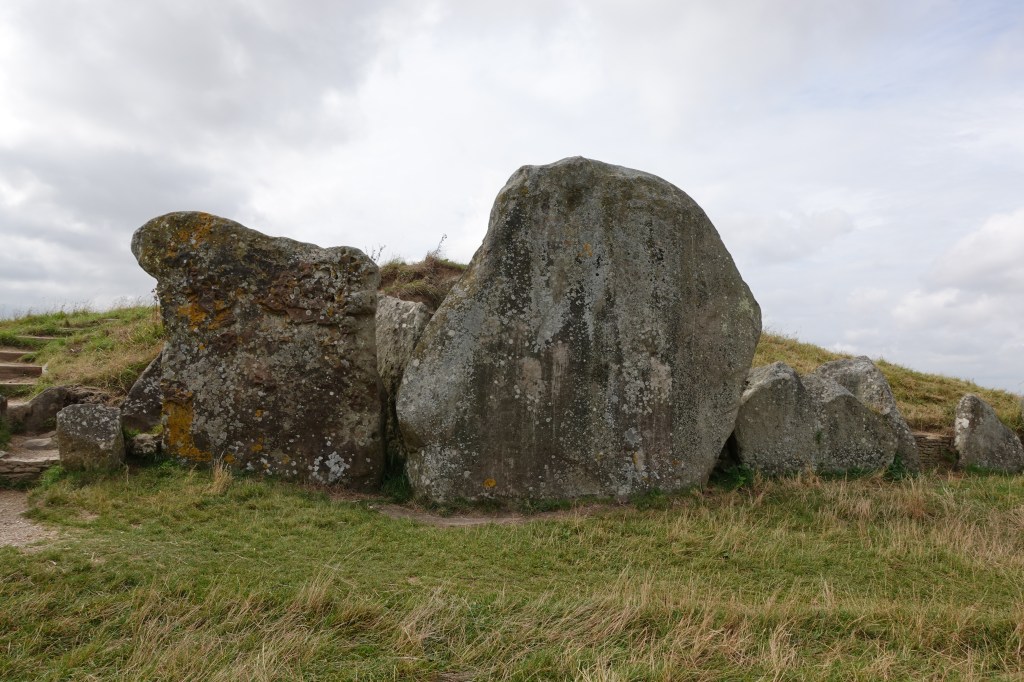
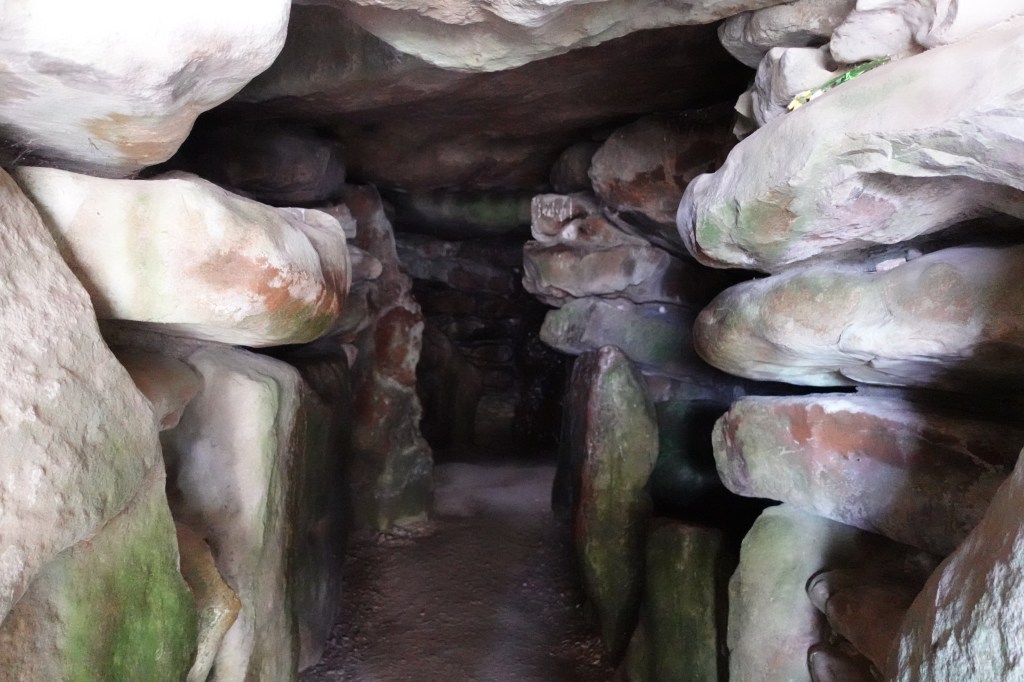
A long barrow is a type of monument from the early Neolithic period, often containing human remains within its chambers and usually interpreted as a type of tomb. West Kennet Long Barrow is one of the largest in Britain, measuring 100 meters in length and 20 meters in width. Although the exact construction date is unknown, it is estimated to have been built around 3650 BC. Constructing this monumental structure would have required moving tons of earth and stone, with an estimated 15,700 hours of labour. Inside, archaeologists have found cremated and skeletal remains of at least 46 individuals. The barrow was used for roughly 1,000 years and was likely closed around 2000 BC.
Avebury Henge

The exact chronology of Avebury’s construction is complicated and unclear. Limited excavations and more recent surveys indicate that many more features once existed within the henge as is the case in others in the country. Much of Avebury we see today is the product of excavation and reconstruction by Alexander Keiller in the 1930s. The earthwork itself is known to have been built in at least two stages and the complexity of the interior stone settings implies they too were erected over a period of time. It is better to think of Avebury henge as an ongoing project rather than adhering to a single architectural design.
Origins of Avebury
In 2017, a geophysical survey revealed new clues about the origins of Avebury. At the heart of the southern inner circle once stood the Obelisk, one of Avebury’s largest stones.

Excavations led by Keiller unearthed intriguing features near this central stone, starting with a 30.8m-long line of stone holes west of the Obelisk. Keiller referred to this discovery as the “Z feature.” Alongside it, he found medieval burial pits that contained distinctive reddish sarsens which were much smaller than other Avebury megaliths. Perpendicular stone holes at the ends of this line hint that the Z feature may have formed a rectangular arrangement. Excavations also revealed a stone hole that didn’t belong to either the southern circle o Z feature and a cluster of post holes, gullies and pits to the immediate north of the Obelisk, along with two features he labelled “natural fissure (?)” and a series of shallow hollows, which he interpreted as medieval marl pits.

Revaluation of these features determined the Z feature’s stone holes were also far larger than the stones that Keiller later re-erected within them, suggesting they originally held megaliths comparable in size to those of the southern inner circle. The gulleys were also parallel in length and defined a structure of approximately 6.9m wide by 6.8m long, with three oval pits or post holes running between them, connected by shallow slots. Keiller assigned a medieval date to this structure, theorizing it might have been part of a cart shed or pigsty.
But this can be questioned.
The absence of medieval pottery in the gullies (and only three sherds from the pits, likely intrusive due to rabbit burrowing) casts doubt on its medieval origin. Instead, recent evidence suggests this structure could date to the Early Neolithic.
Several factors point towards this
- The structure’s alignment is parallel to the Z feature stone holes and occupies the geometric centre of the southern inner circle, just north of the Obelisk.
- It is associated with localized spreads of Early Neolithic worked flint and pottery, otherwise rare within the henge.
- Its plan closely resembles smaller Early Neolithic houses found elsewhere in Britain, dating to between 3800 and 3600 BC.
The structure, measuring roughly 7x7m, fits the size range of these early domestic sites. The assemblage of 346 worked flints further supports its use as an Early Neolithic house. This would be the firs identified in Wessex.

Such houses often lasted only a generation or two before collapse, leaving behind a visible earthwork. This collapsed structure may have been commemorated with megaliths, forming the southern circle and eventually radiating outwards to create the Avebury we see today.
But what about the northern circle?
Interestingly, Early Neolithic houses often occur in pairs or small groups. At the centre of Avebury’s northern inner circle is another unique megalith: the Cove, a pair of large stones, alongside a cluster of uninvestigated features. This raises the possibility of a second Early Neolithic building, perhaps mirroring the one in the southern circle.
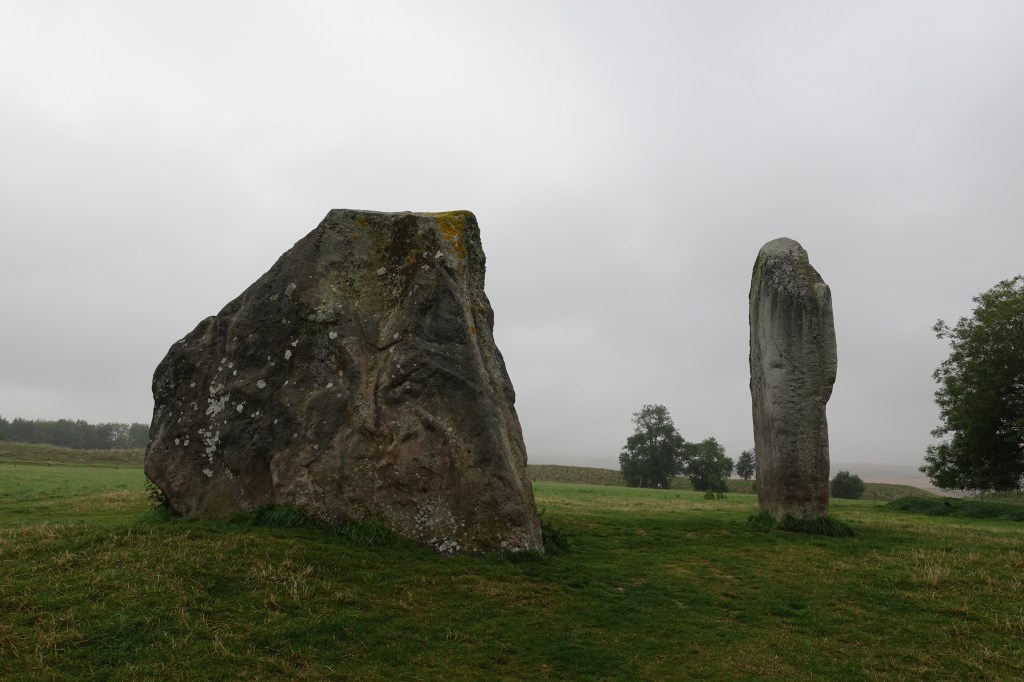
Together, these structures might have set the stage for the monumental landscape that followed.
Later Construction of Avebury
So to summarise, in Avebury, we have evidence of a modest Early Neolithic house (or possibly two), built around 3700 BC. To the North, we have Windmill Hill, a major ceremonial site, that was constructed around 3675 BC. To the South, we have West Kennet Long Barrow, which was built around 3650 BC and remained in use until 2000 BC. Although the Early Neolithic house likely only stood for a generation or two, its location remained significant. By 3000 BC, this significance was marked with the erection of megaliths.

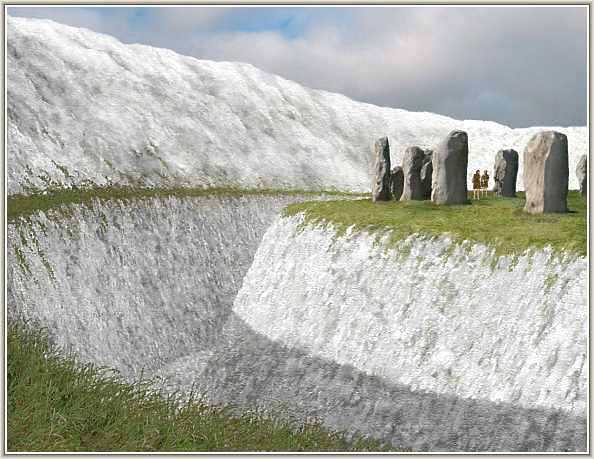
By 3000–2700 BC, Avebury’s primary earthwork, a massive ditch and bank, was under construction, though the exact timeline remains speculative. We know from dating material that the main earthwork sealing the earlier bank was created around 2500 BC. This ditch was monumental, stretching about a mile in circumference and originally over 9m deep.

Before the iconic stone circles were erected, timber structures may have occupied the same space, a pattern observed at other henge sites in Britain. The stone circles we see today were likely constructed between 2600–2300 BC, alongside the famous stone avenues. This was a massive project, built in phases and evolving. The echoes of the Early Neolithic house eventually expanded outward into the vast structure we see today.
Other Monuments in the Avebury Landscape
By the later Neolithic and early Bronze Age, the Avebury landscape saw the construction of other intriguing monuments. Around 2500-2000 BC, we see the emergence of the Bronze Age in Britain, which is another period of significant cultural change, including the introduction of metallurgy and the spread of the Beaker phenomenon. Changes in rituals may have influenced the construction of new monuments in the area.
The Sanctuary

Built around 2500 BC, the Sanctuary was a ceremonial temple consisting of concentric rings of standing stones and wooden posts. While it’s unclear whether the stones and posts coexisted, their arrangement suggests careful planning to control movement and restrict access, emphasizing the exclusivity of rituals performed within.

Silbury Hill

Built around 2400 BC, we also have Silbury Hill. This is the largest artificial prehistoric mound in Europe. It is a mysterious mound that compares in height and volume to the roughly contemporary Egyptian pyramids. It stands at 30 metres high and 160 metres wide estimated to have taken 4 million man hours to construct. The purpose remains a mystery with no evidence of a burial inside.
End of Avebury?
By 2500 BC, Avebury henge may have begun to lose some of its significance, with the site likely abandoned by around 1800 BC. This vast landscape, which was shaped and reshaped over millennia, was a deeply ceremonial centre in prehistoric Britain. It reflected the cultural shifts of its time, evolving alongside the people who built and used it. For many, Avebury remains a spiritual site today, a place where echoes of human importance still resonate.
Thank you for reading and exploring this incredible landscape with me! If you enjoyed this video, please like and subscribe for more content about Avebury and other archaeology and my journey creating a video game that embodies its importance.
Let me know in the comments if you’d like a video on Avebury’s later history or an in-depth look at any of its monuments.

Sources & Further Reading
The origins of Avebury – Mark Gillings, Joshua Pollard & Kris Strutt 2019
Essential Avebury by Steve Marshall
English Heritage
https://www.english-heritage.org.uk/visit/places/the-sanctuary/history/
https://www.english-heritage.org.uk/visit/places/avebury/history/
https://www.english-heritage.org.uk/visit/places/west-kennet-long-barrow/history/
https://www.english-heritage.org.uk/visit/places/windmill-hill/history/
 Louise Bedford
Leave a comment